Tuesday, May 8, 2018

Of signs and symbols


Of Signs and Symbols
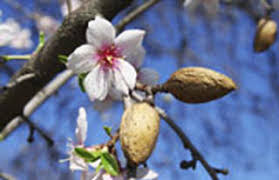
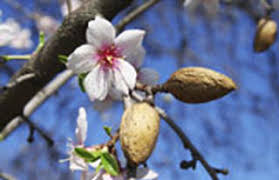
Christians believe that God speaks, and his word, the text of the bible, has a key and central role, as a primary reference and source of accurate doctrine.  Sometimes we exalt that so much that we forget that Jesus is the Living Word at the centre, and that the written word itself points to many other dynamic ways of hearing God. It says, for example, ‘my sheep hear his voice’, and the image is not of scholarly sheep, reading up by candlelight - the sense is the voice rings out over them. They know it by tone and timbre, by experience, and won’t follow otherwise. The same gospel reminds us that diligent study of the word is not, in itself, the same thing a coming to Him. (John 10:27, 5:39) 

Reading the text of the covenant law, knowing the history and poetry and prophecy,  knowing the teaching of Jesus, and teaching about Him, all matters. I've done a lot of it. It informs and builds and trains, gives key context and boundaries. Jesus himself refuted the devil’s wiles with “it is written” – including a subtle temptation to misuse the promises of protection of Psalm 91. Among all this study of the word, the sense of a  “quickened word”,  perhaps out of original context, but weighted in the Holy Spirit with a current meaning and application, is a devotional form that many know.

But the text itself points beyond both this disciplined study and devotional quickening of the text  - hearing and seeing Him directly matters – even in the old covenant. How would we know a good father, or feel satisfied in marriage communication, if only via writing? Notice how many Old Testament characters receive revelation that is reported as “and God said”. How did He say? Not, to them, by a word jumping off the page.  Abraham, for example, the father of faith, must have been having a distinctly experiential revelation as he leaves Ur, and believes God for generational inheritance as he looks at a starry sky, or any of the other key moments he walks through.

The written word shows how some other modes of communication can be established. Some of the prophets, like Zechariah, interact with angels among the visions that cultivate the word of the Lord to them.  Others, like Jeremiah, seem to not have that awareness of angels, but do have other modes. The diversity is all just part of the biblical background that flows straight into the New Testament … how much of this experiential mode (angels, dreams, visions) do we have  the opening pages of Matthew alone?  Or in Acts?  The answer is, a lot.  We need move beyond the inoculating vision of Christmas cards, angels in fields, shepherds overseeing sheep who hear their voice, and start to see and know the host of heaven at work.

Sometimes He uses visual object lessons. “What do you see?” God questioned Jeremiah, who reports he sees an almond branch (Jer 1:11). We don’t’ know if his eye was lighting on a  tree in the yard, like the one above, or an inner picture.   Either can be valid – we can be trained to see his word in either place, or both.  Whatever it was, God says he has “seen correctly”. Then He says, in the next stage in the conversation: “I’m watching over my word to perform it” (Jer 1:12) .The words for ‘almond’  and ‘watch’ are similar in Jeremiah’s  language -  so we see that word play, like  prophetic puns, can be part of what he says: Other examples of those puns could be cited, but that will do for now.


In Jeremiah 1, the next image he mentions is a boiling pot,  tilting from the north. Again there is a dialogue, a question and response. What do you see?  All Jeremiah sees, initially, is the image of the pot. God again adds the interpretation. Revelation and Interpretation are a two stage process, sometimes closely tied, but which may leave us pondering meaning for some time, and which may involve other people.  He tells Jeremiah it means an outpouring of judgment from the north is coming – and indeed it did.  This is a disclosure of some of the early words, and also the ways, that God spoke to him. Images, questions, riddles, nature, pots and armies.


So its biblical to believe we can be guided by God, in various ways.  And that symbols of the natural world, or common items, pots and trees, can be highlighted as strategic.  The moderate, more conservative side of me needs to go over that groundwork. If we believe the word, we should be in for all this.

So today, are up for that listening? He may be speaking through any thing we see, in the minds eye, or physical view, and maybe a word play in English, or he drop an unknown word to intrigue us to seek the meaning.  Can this go astray? Perhaps. Is it biblical? Yes.  How do we discern?  By being willing to step into the unknown, and by training, to discern, to weigh. This should be basic - his sheep hear his voice. 

I have an example that has an outworking for Bendigo and this time.

A personal example - exit signs. 
So, for quite a long time, i‘ve known a particular symbol as part of the personal language of guidance, the humble green Exit sign.  The older ones were just text, now there is an image as well. 

Normally I don’t notice them, they stay in the background, as exit signs should, waiting for some unlikely emergency use. However sometimes they seem to stand out, to be highlighted to me, at strategic moments. 

This happened (and happens) infrequently but enough that I noticed.  As a teacher, I might be in a staff room, for example, which I’d often worked in, and as a conversation reached a particular point, an exit sign in the corner would seem to stand out, as I’d feel a quickened sense that we were on a key moment.  Up to that moment I barely would have known if the room had an exit sign, and such highlighting always seemed to correspond to a key moment or confirmation of God’s path. Someone might suggest an idea, and the sign, unnoticed till then, would seem to stand out over their head as a mode of endorsement. It happened rarely  -  don’t think ever twice in same location, yet enough that I noticed it recurring over the years.

So usually a subtle highlighting, but sometimes a little more dramatic.  For example, one morning I flew to Sydney for work, and got there mid morning, Then, 5 team members from my workplace, myself included, happened to converge on level 5, a new floor for the company, under an Exit sign.  We all just seemed to come from different directions at the same time.  “Woah!!”  I said, “convergence! Hold hands … lets do a parachute jump” …  and somehow it didn’t seem too odd to stand together  holding hands and pretend to jump out of a plane as a group, on the new office floor. We’d just been through a difficult season, so it was a statement of solidarity through the difficulty. (They probably saw it as bit of fun, but I was feeling more like prophetic activity). My email beeped and I checked the subject on my phone:  It said “level 5 is now open for business”. The sign had helped me seize the moment.
 

At other times a corridor would seem to light up with the signs and their reflections, usually at night as I was about to leave a work role, seemingly a confirmation that this was or had been a valid domain of work.

Generally speaking, the occasional accent on these literal signs seemed some signpost of his presence, a sense of being on the right path.

Still, I thought it was just a type of personal symbolism He was developing with me, like almond branches and pots might have been continued to be for Jeremiah. (Perhaps Jeremiah might have later noticed the almond tree stirring, as a private confirmation of God’s previous word, as he was rejected by the king and or officials).

 I didn’t always know why these exit signs were a mode for me, but it always seemed good. Other recurring symbols were sometimes quickened with different meanings.
 
Layers of meaning can unfold
In 2016 I started to connect it with a scriptural sense.  I had been given Rev 3:7-8  some time previously 

These are the words of him who is holy and true, who holds the key of David. What he opens no one can shut, and what he shuts no one can open. I know your deeds. See, I have placed before you an open door that no one can shut.  I know that you have little strength...

And I was fast becoming aware of the key significance of another ‘door’ scripture, in Revelation 4,

after this I looked, and there before me was a door standing open in heaven. And the voice I had first heard speaking to me like a trumpet said, “Come up here, and I will show you what must take place after this.” At once I was in the Spirit, and there before me was a throne in heaven with someone sitting on it.

That last passage really started to resonate. I listened to it over and over. All of the newer exit signs had an image of a person going through a door-  and this now felt as if called into higher places. I started to experience what that verse was talking about, and felt like He had always been leading me to this place, as though the signs had also been a trail of sorts. The upward call. I discussed it with a prophetic friend, as we flew home from NZ. They’d placed us in the emergency row, so we had exit signs on both sides, over doors in the skies, which seemed fitting.  

A favourite verse of mine is John 10:10, about abundant life. The lead up to that (John 10:7), also discloses that Jesus is the door, or gate.

part 2


Tuesday, March 13, 2018

Shepherds (part 1)


I‘ve been thinking about how two primary examples of leadership, apostles and kings, actually contain a shepherds heart, and how that might apply to us.

David and Peter are foundational paradigms of King and Apostle. One starts as a shepherd, the other is commissioned to behave as one. So the big hitting roles in the Kingdom, are underpinned with a pastoral role and function.  There are things we can learn from these two individuals, and leadership roles more generally.

When their own faith and devotion breaks, when they are in need of pastoral care, the  terms of God's restoration to them forge the pastoral role more deeply.  Peter is commissioned to replicate that role, and David is humbled in these terms, and retains his heart in God.

Lets start with David.  The greatest of Israel’s Old Testament kings, David is the pre-eminent example of royal lineage, who even appends a title to the King of Kings.  Thus Jesus is known as son of David, not son of Solomon or son of Josiah. More tragically, he’s not ‘son of Saul’ (tragic since Saul is told, as he loses the kingdom, that he had potential to be granted an everlasting name, and lost it).

So it's David who is the great king after God’s heart, the king who knows God is really King, better than the failed king before him and most of the ones that follow.  It seems God has gone to a lot of trouble to build all of this on the heart of a worshipful shepherd before kingship was added. More on him in a moment.

Fast forward to one of the great leaders of the New Testament – Peter.  At first glance he doesn’t look overly pastoral. If anyone might seem prone to missing it, impatiently overshooting the mark like Saul had, then Peter would seem to be the man.

He is certainly on the brash side. He sometimes nails it in one sentence, and overshoots in the next.  His ardour is intense, and yet he swings from one edge to the other.

So it's Peter refusing to let Jesus wash his feet – seemingly offended by the humility of the idea -  then wanting a full bath when he gets it.  Confessing Jesus as Messiah and Son of God, then being rebuked the next minute for letting Satan speak into the inner counsel.  Jumping out of the boat to walk on water, and then falling in, seems almost like his standard mode of operation.

He’s a fisherman, so it seems he has not had the temperament or academic edge for religious studies. Later in life he admits he finds some of Paul’s writings confusing.  But he knows what he knows.  He’s a chosen eyewitness who reads the signs and is a leader.  He saw the prophetic sign in the mighty haul of fish and reckoned his own sinfulness without any sermon.  He saw Moses and Elijah appear in glory with Jesus, discussing the pending exodus. 

 Jesus obviously knows him through and through.  Indeed knows Peter will finally confirm his shortcomings, will be on the wrong side of the line in spectacular fashion, and tells him so in advance - that his faith will fail as the dawn breaks on his darkest day.  

So after promising so much, he does deny Jesus on that crucial day. Takes the others back  fishing after the  crucifixion, the final terrifying end to the strange adventure.  
But then there he is again, leaping into the sea as a new haul of fish, the same sign that had originally reached him, is issued again. He dares to hear a new call, a resurrection call, from the Stranger on the beach, and he is literally all in.

It's at that low point God hammers home the need for pastoral heart into this bold and natural leader. At his lowest, face to face with the one he had promised so fervently to serve, to never deny, comes a pastoral charge.  

When they had finished eating, Jesus said to Simon Peter, “Simon son of John, do you love me more than these?”
“Yes, Lord,” he said, “you know that I love you.”Jesus said, “Feed my lambs.”
 Again Jesus said, “Simon son of John, do you love me?”He answered, “Yes, Lord, you know that I love you.”Jesus said, “Take care of my sheep.”
 The third time he said to him, “Simon son of John, do you love me?”
Peter was hurt because Jesus asked him the third time, “Do you love me?” He said, “Lord, you know all things; you know that I love you.”Jesus said, “Feed my sheep"
John 21.

The exquisite wounding of the Son of God; relentlessly hewing into his disciple’s heart a new call, tracking deeper then even his deepest devotional assertions.   Feed my lambs, feed my sheep, feed my sheep.  At this low point of restoration, it sinks in.  In the masters hand the vulnerable place, the place of restoration, drives a new call.  Like Jacob wrestling with the angel and his old ways, here comes forth a new way.

And Peter gets it. Later, when he writes his letters, he holds fast to that same teaching.   Addressing church leaders, specifically elders, he re-iterates this one point: be shepherds, as Jesus is the Chief Shepherd.  

to the elders among you, I appeal as a fellow elder and a witness of Christ’s sufferings who also will share in the glory to be revealed: 2 Be shepherds of God’s flock that is under your care, watching over them—not because you must, but because you are willing, as God wants you to be; not pursuing dishonest gain, but eager to serve; 3 not lording it over those entrusted to you, but being examples to the flock. 4 And when the Chief Shepherd appears, you will receive the crown of glory that will never fade away.
5 In the same way, you who are younger, submit yourselves to your elders. All of you, clothe yourselves with humility toward one another, because,
“God opposes the proud     but shows favor to the humble.”[a]6 Humble yourselves, therefore, under God’s mighty hand, that he may lift you up in due time.

(Not, be evangelists with my boldness, or seek first hand prophetic voice and encounter like the one I had on the mountain, or pioneer new domains of outreach, or teach into spiritual experience as clearly as I did at Pentecost or with Cornelius … in the end, he has one main charge to elders: be shepherds. 

So, back to David.

 He had started as a shepherd – and sees deep truth in the heart of God.  he wrote the most famous of all Psalms, on the theme.

“The Lord is my shepherd…
He makes me lie down in green pastures, by still waters
He restores my soul.. 

 And from that point on, it’s a recurring theme in the scriptural revelation of God, and his own life.

But after all this, David, too, had a similar break of faith to Peter. He didn’t only deny his Lord by committing adultery with Bathsheba. He’ hammered home his rebellion by arranging the murder of her husband, with a treacherous use of the armed forces. It's a king going astray, wickedness in high places.

A prophet gets sent to him, and tells a pastoral parallel in intimate, almost sugary, brushstrokes. The story of a poor man who treasured his only lamb as a daughter, and yet is forced to give her up to the slaughter. It's designed to provoke the heart of a sullen king, one who had been a shepherd, to an elementary recourse to justice. After provoking the judgment of the king against this hypothetical transgression, Nathan turns it back onto him.  “you are that man … ..you have killed the lamb of the poor man …   and now the sword will never depart from your house.”

 The image reaches him, stops his abuse of power and privilege, sparks the touch of  justice that is needed for David to not ignore or kill the prophet, as other kings would later do. It pierces him to repentance.  The consequences do never leave, the prophet had been right about the sword in the house; the whole episode releases dynamics of rebellion, violence and adultery among some of his sons, but at least he has found a way back in God.  And in the end, he is still, partly because of his contrite ways, the man after God’s heart.

God works deeply within both leaders. David and Peter, to restore and save them, as the Shepherd; and to reinforce that heart in them. Isaiah says of Israel’s Mighty One;  “He carries his lambs close to his heart”,  and it must be so in the hearts of his kings and apostles.  Even those who do not start with this grace or heart, can find it being worked in, even via the low points of the journey.

Part 2  rounds this out with some of the counterbalancing risks.  

Tuesday, May 2, 2017

All i ever needed to know about mentoring ... my grandmother knew


I thought of my grandmother this morning, of something she said.  As I pondered that, something odd happened – I was fossicking in a drawer for clothes, and found a beautiful silver hand-mirror she had owned.  I hadn’t seen it for years, didn’t know it must have fallen sometime ago into that drawer. As I traced the heavy patterns around the glass she must have used, I sensed the connection of the moment, the mirror emerging like a lost treasure as I retrieved an insight from her life. 

She  was a remarkable woman.  All who knew her thought she was the example of living well, embodying a generous heart for people and learning. She remarried at 75.  In her 80s she volunteered for meals on wheels, travelled to China, served breakfast in bed to her university age grandson when he visited.  She drove, erratically, into her nineties – she would court the local policeman with tea and scones after each driving test,  and he would reluctantly sign off on another year,  and caution her to stay near town, a little fishing village in Tasmania.  She walked to the library for weekly lessons in email, and was printing off photos of great grandchildren, at 98. 

Her mind had not been desiccated by the abstractions of  formal education, and in everything she retained a wonder, a deep interest, a broad frame for culture and  learning.  At 95, driving to lunch, she’d comment if some species of flower was out early this year. We have a letter her own grandfather wrote her as a child, identifying the plant specimens she had sent to him, and enclosing a novel back to her. 

The book - Masterman Ready -  is a tale of a European family marooned on an island, and industriously making do, with natives in their subservient place. She stood in the stream of that colonial heritage, with all of its strengths and errors. So it was a measure of her willingness to learn and stay flexible, that that heritage did not script her views - in her latter years she had become pro native title and indigenous rights.  

 Occasionally I would find her kneeling in prayer before her bed in the evening.  She was the life of many parties and gatherings; increasingly all being younger than her. She exchanged weekly letters with my mother. Her correspondence was always filled with a social record that seemed full rather than frivolous, verdant as the garden she tended, and drew fruits of the earth from. When relational trauma struck around her, she had insightful things to share.  

So to a reflection on relationships and mentoring.  In the way of the modern things, a list, mirrored from her.  


1. Be authentic. real.   

I doubt that she, who showed so many people such an example of life, thought much about “mentoring”. Her example and influence grew out of her life and character, a genuine love of life. And so with true mentors the modelling happens easily, and with a humility that often allows learning to flow in both directions.  It occurs in conversation that feels more like friendship than structured interaction. The best mentors i have had, at work or in faith, knew more than I did, and were generous is giving, yet still keen to keep learning.

2. Relationships first. 

Relationship has to carry  mentoring.  So even when the workplace, or some club or group asks for it to happen, sets it up, the relational chemistry still has to work. That makes the dynamic really hum, and can morph that need for performance into a lasting partnership and affection. Conversely the lack of that relationship can make such things feel like a grind, and cut it short before the desired harvest.  Relationship has to carry mentoring. 

3.   Faith is a platform that evens the ages.

 I recall her observing that there were “such interesting young couples” at her church, and my mother wryly observing  “isn’t age such an inconvenience”  -   since at 90+ it was finally getting too big a gulf to allow the social connections she was still ready to form. I think faith flattens the ages, in two ways; it keeps the older ones young, childlike, and wondering at the new life and colour in those around. It also grants a humility, a sense of  common threads and mysterious incompleteness, a willingness to expect new story, new potential, in each new person and situation.  So there is a willingness to hear a surprising new line fitting in to an old song.  All walk in respect for each others story, expecting newness.  Then relational mentoring might flow in both directions.

4. Faith need not be explicit to be influential. 

We never actually discussed religion. I did not have any for a good chunk of that time,  and when I did it was a new wine, more vigorous, and she was not the type to discuss such things. ( The ritualised Anglican handshakes of “passing of the peace”  made her grimace; too artificial in their touchy feely aspect - so we probably weren't going to discuss pentecost and spiritual experience).  But the basic generosity of such a person, can still create a local culture. Even now, a moment of peace, of God's presence, can take me back to the shalom over her house and garden. 

For example, if i worked on a job application in her presence, she would take a keen interest, trying out new terms of science and IT, interested in what they meant.  I think those values of learning and appreciation seeps into others,  for some distance – into workmates, students, grandchildren – even in very formative ways.  The generous neighbours who listen to our kids, are similar.   Maybe I should have tried the new religious terms too .. it was a bridge we didn't cross somehow, much as we drew deeply on a common faith.
--- 


So the mirror helped me reflect on something there. If I connect across age ranges, without thinking much about it, it has to do with that legacy, that common source.

I noticed this when i came to faith, that there is a common frame to things, a sense of family, a familiar, yet still surprising story, that weaves through all. The capacity to say "we", in spite of all of our differences.   A common experience that connects across all sorts of other differences - age and education and culture fade in importance. 

Wednesday, September 7, 2016

The Collar

The discussion i quoted in the last post, ism I suppose, somewhat of the same nature as this travail.


The Collar 
George Herbert (1593-1633)) 


I struck the board, and cried, "No more;
                         I will abroad!
What? shall I ever sigh and pine?
My lines and life are free, free as the road,
Loose as the wind, as large as store.
          Shall I be still in suit?
Have I no harvest but a thorn
To let me blood, and not restore
What I have lost with cordial fruit?
          Sure there was wine
Before my sighs did dry it; there was corn
    Before my tears did drown it.
      Is the year only lost to me?
          Have I no bays to crown it,
No flowers, no garlands gay? All blasted?
                  All wasted?
Not so, my heart; but there is fruit,
            And thou hast hands.
Recover all thy sigh-blown age
On double pleasures: leave thy cold dispute
Of what is fit and not. Forsake thy cage,
             Thy rope of sands,
Which petty thoughts have made, and made to thee
Good cable, to enforce and draw,
          And be thy law,
While thou didst wink and wouldst not see.
          Away! take heed;
          I will abroad.
Call in thy death's-head there; tie up thy fears;
          He that forbears
         To suit and serve his need
          Deserves his load."
But as I raved and grew more fierce and wild
          At every word,
Methought I heard one calling, Child!
          And I replied My Lord.

uni

So ..  here is an essay i wrote once, on uni experience. It morphs a discussion topic into a reflection on the common experience, subverting the subversion.  I was a little older than the students in the course, having returned to a Dip Ed, and a bit of English literature, after a few years working in science.   It seems rather bleak now, and i long to think one can attain the generous note at the end. But in sharing it at the time, others resonated with the stark note of protest; in many places the ideological battle really is this hard line and explicit;  a reverse fundamentalism, intellectually complex enough to convey authority, yet quite militant and partisan, is at work in these cultures.  My Indian tutor of English Literature had enough grace to acknowledge the line of thought; maybe had enough cultural distance to see what I meant; and to initiate a group discussion of underlying ideas. Maybe it can still provoke that discussion somewhere.

Incidentally, a sonnet was also needed for that task.  Its included at the end.


 PART B
A piece "which clearly relate(s) to the content of the course either in form or content" addressing "thematic issues raised in the course such as constructions of gender, power relations, revenge  ...  etc" or  " ... various poetic genres, narrative etc." (1) (italics added)


ABSTRACT
Instead of viewing the course as a window upon seventeenth century literary production, this article is concerned with some of the peculiar attributes of the window itself, the common views and distortions which it impresses upon those who crowd around it. There is a deliberate shift of focus away from the nominal literary and critical content of the course, and a refocussing upon the reception and reaction of this material in the minds and hearts of those receiving it - the student. Just as Hamlet instructed the Players performing the Mousetrap to hold a "mirror up to nature", so this fragment of work presumes "to show the very age and body of the time his own form and pressure" (2). The mandate to make connections with the thematic concerns of the course is applied at the point of delivery; the "wider literary historical and theoretical work of the course" (3)  is considered in terms of  the course's function as part of the undergraduate experience. Thus this piece is largely a critique of the concepts and ideologies which begin to lodge in the minds of students, almost by default, within the contemporary academic environment, as exemplified by this initial contact with a university course in literature.  If it is deemed necessary to justify the writing of a piece which may seem to lie outside the terms of the question, then it is submitted that the question is amenable to an interpretation of this type, and that the  outline of this piece is strictly in keeping with the written requirements. It is only one more shift of critical viewpoint that generates this perspective.

Simultaneous to the consideration of genre within seventeenth century literature, the student of such matters is also confronted at another level with the contemporary genre of academic discourse. While historical contexts to literature are being discussed, the prevailing atmosphere of the current intellectual environment  begins to impress itself upon  receptive minds. The attempt to  reconstruct power relations in English society of  four hundred years ago,  for example, is itself shaped by modern ideology which actively confers status and prestiege upon certain viewpoints and modes of thought. The multiplicity of critical approaches which the course begins to introduce as being representative of the diversity of contemporary criticism, masks a uniformity of experience in the mind of the student. Let us consider what glowing letters may constitute the very words "Literature ... Poetry  ... Philosophy" in the minds of the budding scholar, and what hallowed associations may cling to the very concept of "University". It is against this background; and I suggest that it is ubiquitous in the mass of incoming students, that the inroads of the dominant philosophies are best read, and the fate of "Th'expectancy and rose of the fair state" (4) is seen. In brief, we may summarise some of the common strands of these philosophies: God is dead or missing, the Muse is dead,  the prosaic stands over the poetic,  argument substitutes for perception of truth, criticism is exalted to a primary position (this is a shock to the uninitiated),  conventional morality is somewhat ridiculous, feminism is lauded in every corner, and sexual interpretation becomes one of the few standards and benchmarks that stand. In broad and sweeping terms, these  are the "theoretical underpinnings",  the working paradigm, which accompany the inchoate study of literature. These elements are first encountered as an impression  of  what is already established or presupposed in the current order of things, rather than as  matters of explicit debate. They  break across the untutored consciousness like waters rising over dry ground; the turning tide "eats not the flats with more impiteous haste" (5) than these theses are recognised and replicated as dominant principles.  They constitute a basic set of philosophical assumptions  which are intuitively appreciated to be the "approved" formulation and perspective; although some sense an omission, a betrayal, a feeling of  "noble and most sovereign reason/Like sweet bells jangled/Out of time and harsh" (6).

(A brief qualification is needed at this point: the validity of literary criticism, feminism, and sexual readings are not disputed. It is only, as Coleridge lamented, that "what suits the part now infects the whole/and now is almost grown the habit of my soul" (7). I am concerned to describe by what means partial truths are pushed out of proportion until they infect the whole, and what habits of soul follow.)

The first of these conditions - God is dead or absent - is the generator of the others. A dubious, absent or dead First Cause, throws everything else into either rebellion, darkness or chaos, and promotes otherwise worthy causes to the status of idols. Failure to acknowledge and reverence the Uncreated source of power, the Creator of relationships, corrupts all other power relations; in a multitude of ways, things will fail to work if the Ground of reality is ignored.   It would need a Milton to chronicle all the subsequent losses and corruptions that follow from this original coup, and the relating would produce another epic. It may be put baldly, that a realm of spiritual darkness enshrouds an academic subculture that has specialised in "words, words, words" (8) and  does not acknowledge the Word of God as such. This darkness works as an unseen agency that overshadows much of the corporate life of the campus; I sketch it's effects below, and here only mention in passing  the flat dullness seen in so many  eyes, and  the unnatural heat that seeps into addictive, vindictive argument. I remember, as a seventeen year old, newly walking the grounds of the university, and sensing  from the very pit of my stomach a corruption in the atmosphere of the place, a sickening and violent  tearing down and destruction of boundaries. I intuitively knew that the sexuality and morality of the student body were implicated. That moment, and similar sensations in those initial weeks,  soon passed into the background, but I have since come to perceive that  the very geography of the area is imbued with a grimy and heavy spiritual atmosphere, is even overshadowed by "black Clouds/ with Heav'n's Artillery fraught" (9). If we allow  Donne to be heard without obscuring his meaning with our own preconceptions, we find him speaking into this situation: "our old subtle foe so tempteth me/That not one hour can I myself sustain;/Thy Grace may wing me to prevent his art" (10). The "default" paradigm does not admit such things as satanic foes to attain to the status of  simple reality  - the approved technique is to  classify and dissect any literary specimens, as though personally never "brusht with the hiss of rustling wings" (11); we are not exempted from his "subtle art" for being so blinded.

Thus I argue that  "This realm dismantled was/Of Jove himself; and now reigns here/A very, very - peacock" (12) and that the glowing letters of promise slowly fade for many. If this is our predicament, and the reigning ideologies are militant against spiritual truth (the doctrines of sin and salvation certainly do not fare well in this environment), then we may proceed to examine some of the further consequences of this state of affairs. The term "ideology" has been used so far in a non-technical sense to refer to a general tenor of thought, rather than the details of any specific system. This loose usage is in keeping with the reflective intention to "show the very age and body of the time his own form and pressure" - a more appropriate term is perhaps the "spirit of the age", as this more readily suggests the interdependence of  theoretical ideology, social praxis and unseen spiritual powers. I propose that the spirit of the age takes two predominate forms - both of which have already been touched upon - which exert pressure upon a realm dismantled of Jove. The first  of these is sterile intellectualism, the second is sexual transgression.

These two phenomena walk, if I may put it so, hand in hand.  When the well springs of inspiration are blocked, and the love of intellectual Truth and Beauty is obscured, then Eros may attain a godlike role in the scheme of things. The mind that is adjusting to an environment that does little to nurture and steady the hearts intuitions, but fosters a purely cerebral development (this fault being particularly troublesome in the "humanities") , is doubly prone to see romantic love as supplying the meaning to life.  In a terrain where the "Heav'nly Muse" (13) is not invited to brood over the workings of the mind and so impart life and light , then sexual desire may appear as the brightest  flower in a lacklustre field.  The bodily writhings upon the South Lawns strike me as casualties on a central battlefield:  their prone figures giving mute testimony of the forces arrayed against them. The sight of amorous couples availing themselves of green grass and sunshine may seem to need no further explanation, but I read the scene with the same ambiguity as Fortinbras surveying the carnage in the royal court:  "Such a sight as this becomes the field, but here shows much amiss" (14). I cannot help but be aware that this love has a desperate subtext: "And if I press ever deeper into the arms that embrace me, perhaps a miracle may happen." The young man who wrote that also spoke of the collective disillusionment that had first brought him to this point, the betrayal of hope: "we were eighteen and had begun to love life and the world; and we had to shoot it to pieces  .... the first explosion burst in our hearts". The military metaphors capture something of the violence encountered in the unseen terrain of the heart and mind, the shocks and numbing blows, as the spirit of the age asserts it's muscle. I was forcibly impressed with these and similar quotations when I was first an undergraduate. They were resonant with my own experience and were instrumental in persuading me that we are involved in an actual, if invisible, warfare; for although the quotations dovetail neatly enough into this analysis, they are in fact taken from All Quiet on the Western Front. (15) The psychological experiences of  that young soldier bore sufficient parallel with my own  that I was more readily persuaded  of  the doctrine that  tells of a warfare against  immaterial opponents,  against "the rulers of the darkness of this age, against spiritual hosts of wickedness in the heavenly places".(16)

There are casualties in war, and an observer who recognises the contours of this battle, must wince at the losses that are silently inflicted upon those  "who, even if they may have escaped it's shells, were destroyed by the war" (17).   I propose that  a playwright attempting to create a universal work that expressed these dynamics,  that held a mirror up to the common experience,  would find that  the individual stories could be fitted, at least in part,  into the genre of tragedy.  If we look for the figure of the Revenger to complete the parallel, let us take Milton seriously when he tells of the fallen Lucifer being "inflam'd with rage  .. To wreak on innocent frail man his  loss" (18), and his attempt ("with thoughts inflamed of highest design" (19) to strike back at God by marring His creaturely image.

A further qualification may be needed at this point; I do not see the failings of individuals and institutions, in themselves, as working a deliberate plot of destruction; it is only when they are fitted into a spiritual context  that "this/ Like to a murdering piece, in many places/ Gives me superfluous death". (20)    

I conclude with a personal glimpse of my own story, a few notes jotted over the years, in which I first reflected on how the "form and content of the course" of my own studies,  was linked with the "form and pressure" of the "very age and body of the time". The contention I have been arguing is that the explicit "thematic concerns" of a course such as  Reading Writing  are conditioned by the spiritual environment of the day, and that "the wider literary and theoretical work" of such a  course of literature includes the propagation and replication, albeit unwittingly,  of a mindset peculiar to that  environment. The relationship between  these factors is the subject of the following notes:
There are several blindnesses inculcated by the course, apart from the specialisation of subject matter. The failure to criticise   ....  their effect on us. To see their broader shape in faculty politics; middle aged academics ... teaching a mass of young undergraduates.     ("treading water in an eternally changing river of youth" (21)
Belief or criticism as the final authority: to switch from one to the other is well described as conversion.  
I thought about that ground, where the arts faculty stands ..... I sensed the flavour of the place, felt it's faults, it's limitations in knowing ..  living religion. 
Literature. Poetry. Religion. I was drawn to these things by the promise and the life that seemed to go with them. Certainly much of it seemed to be systematically missing the point but  .....   it was here, by luck or grace, that I often turned.       
 Real belief gives meaning, ... deep purpose, and this prevents reasoning powers being bruised... Surrogate beliefs trying to fill the void, or becoming an obsession, lead to irritable, unbalanced reasoning. The initial image or semblance of salvation and freedom that the belief (ideology) may bring, depending on it's correctness when it's place, is swamped as the belief becomes an idol, and the more the part is mistaken for the whole, the greater the burden and entanglement.  (Hence dominant secular ideologies - feminism, Marxism (until recently) - locate an oppressor - patriachy, capitalism - and make them the primary source of society's problems. The partial truth of this must inevitably be distorted out of  it's real proportions if the spiritual backdrop of rebellion and redemption is ignored; the ideology gives a faulty worldview if it's tenets are idolised.)            1/90

"This has become apparent to me recently, a correct way to look back over the years. For it has not all been cumulative; a steady growth in spirituality and corresponding self image. No. The journals I burnt : I am sure that they contained subtle and reflective self expression. The problem there is the fragmentation of the life at the time. Wisdom gleaned and words honed on a page were almost the brightest thread in a life which stumbled, and so they must misrepresent the time .                 
 "one dimensional rational thought gives way to poetic and philosophical reflections. Requires the prophetic edge, the song of life."  
 "I feel God awaken, kindle a flame in me. He drew me - I felt His hand upon me - to pray in a lunch hour.  Kneeling, surrendered, a series of reflections are poured into me.
             ...  leave after an hour , knowing God has been there ... seeds emplanted, excitement running in me, vision, purpose." 6/93     
He who finds me (wisdom), finds life, and obtains favour from the LORD.
                                                                                                       12/93 (Proverbs) 
I meditate on a map of the uni; it is a meditation in the spirit -  I am shown the nature of the place - I can map in all the various departments and fields of knowledge. Can trace all the paths I have taken here. Any one of these sciences could still interest me, but I cannot desire the gleaning of technical wisdom as a  primary ambition. Not now. It is time to build into the lives of others. I know the ways I am being directed into.
God says to me, "I am intimately interested in your thoughts" as I cross the concrete lawns at midnight. It is a beautiful way of saying I love you.  
I meditate on a photograph of the university when there was a lake.
Somehow the grandeur of the stonework intimidates me, who stumbled and was sidelined at that place.
But I keep there, until I feel the goodness of the meditation, see it filled with goodness and laughter and study.
And then my focus changes, and reflected in the A-frame notice-board of the wind tunnel, I see a cross-beam; the foundation stone of the university. I saw something similar the night of the college re-union; the stone cross on Newman chapel representing the undergirding goodness and strength of the place, which I had forgotten - the benevolent atmosphere and original foundations.      
--0 --

And that sonnet, that says the same thing, in another way.

 I  love more the short spring and autumn days,
 When the sky vault's trembling fragile beauty,
 Rests a gentle blessing, above the ways
 And paths of learning, so lending duty
 This ennobled richness, as flowing time
 River threads green lands thick with their fruited
 Branches lifted sunward in favoured clime:
 Fields of knowledge where fair youth be tutored.
 The very spaces of detailed grounds are
 Felt as icons of layered thought where fine
 Precept is added on precept and star
 Rises early, gleaming as night poured wine.

    Poetry hangs in air of such seasons; 
    Harvested not by realm of dry reasons.


( I didn't mean to protest the mode and mood of discursive analysis per se - i'd studied a lot of science  after all -  but something of a former or possible nobility in the university seemed blasted, shot through, laced with darker things, against a sense of what could be recovered, restored.)

2020 OPPORTUNITIES IN THE SHAKING

  2020 OPPORTUNITIES IN THE SHAKING - 4 horsemen  I have the emergency app on my phone. We monitor here and the beach. It must have gone off...